Swami Vivekananda: The monk as man
Translated from an article by Dinesh Aminmattu, Prajavani, 16th Jan, 2012
Swami Vivekananda was a “dull” student. He lost his job as a teacher because he was ‘not able to impart lessons’ to students. By birth he was diseased. And by the time of his demise not one or two, but was suffering from 31 different ailments. Matching with his Bengali descent, he was an obsessive junk food eater. Until the last day of his life he was eating non-vegetarian food, and was also able to cook non-vegetarian recipes derived from national and international cuisines. He would smoke cigars and hukkas like an addict. Without distinction of it being Hindus, Muslims or Christians, he would eat at all their homes, Even while he was devoted ‘Sanyasi’, he would be engaged in all the get together parties that were organised throughout the day in the hotels, while he was in the USA….
If these snippets be propagated, to all the people currently engrossed in celebrating the 150thbirth anniversary of this “Revolutionary Hindu Saint”, they would be taken aback with terror. Nonetheless, these are true facts.
Even though from a backward class (shudra), Vivekananda took up Sanyasa going against the Hindu tradition. He denounced the same tradition again by crossing the oceans. Rebelling against the ancient traditionalists he would stay put at the ‘unholy’ places of westerners. For the very same reason, High Court judge Murthy Gurudas Mukherjee refused to head the Welcome Committee after Vivekananda was returning from the Chicago World Religious Forum address. After the renouncement and the ‘sainthood’, numerous eminent people from the ‘upper castes’ would address him a friendand not as swami. He expressed his infuriation about the hoaxes, customs prevalent in Hinduism and other perils like casteism, untouchability, blind superstitions, temple rituals and these outbursts would for sure have earned him the tag of an enemy to Hinduismfrom the fanatic proponents of Hinduism.
Ideas like “Head is superior, and legs are inferior”, which instilled disparity within one’s own body and other disparity installing mechanisms that are inherent to Hinduism had frustrated Vivekananda, and in rebuttal he would say that people should have “Muslim bodies, with Vedic minds”. When the Maharaja of Khitri, a disciple, expressed his dissent about Vivekananda eating at a Muslim home. Vivekananda retaliated by saying, “I would even eat with the scavengers. I wouldn’t be scared of people like you. You don’t know anything about God or religion.” Once, an emotional Vivekananda went on to say, “If I were alive during the time of Jesus, not with my tears, I would cleanse his feet with the blood oozing from my heart”.
He would also defer the argument that Hindus were converting to Islam because of the force of Muslim rulers. He would attribute this migration to the inherent casteism, untouchability and exploitation in Hinduism. When a religion does not recognise and respect the fundamental rights of humans, then it no longer is a religion, but “dance of the devil”, and the place becomes “hell”, was his perception. He would also reminisce words from his teacher Ramakrishna Paramahansa, “Mutual respect between religion is not sufficient, there must be a cognizance of the fact that all the religions are true”.
Hoping that the 150thbirth anniversary celebrations of Vivekananda “Utsavamurthi” would increase the awe and respect towards him, but when experienced turn out to be a disappointment. Even after 110 years after the demise of the maverick saint who lived for only 39 years, 5 months and 24 days, after endorsing sainthood at an age of 24 years, life of the real Vivekananda is still shrouded in obscurity. Often in recent times, Vivekananda is being projected as the “Brand Ambassador” of Hinduism and in this process, traits which weren’t his are being fabricated and portrayed exaggeratedly to elevate him to the place of God!
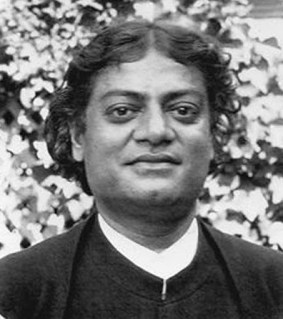 |
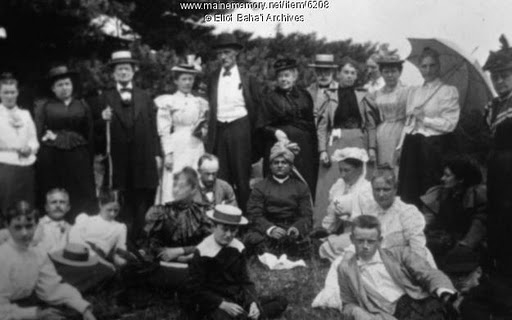
| Vivekananda in South Pasedena |
This misrepresentation is nothing new. People who have wanted to transform the society by social reforms have all been made ‘deities’ and have been distanced from the common people. The notion that, if not for an incarnation of God, no normal human being can grow to have any substantial impact has been shrewdly planted and perpetuated by various religious leaders with political leaders as accomplice. Starting from Buddha to Basavanna, Vivekananda to Narayan, all these people leaders have been escalated as deities amidst their ‘worshipers’ and are today drowned in the anointments and chants of their ‘devotees’. Sinking under the worshiping of these these devotees, the real life and ideas of these great leaders are going oblivious in the pages of history.
Last year, Penguin Publishers published a book “The Monk as Man” by famous Bengali writer Mani Sankar Mukherjee. This is the English translated version of a research based Bengali book (Sankar’s novels “Seemabaddha” and “Jana Aranya” were made into movies by Satyajit Ray). Apart from the ideas and philosophies of Vivekananda, the little known private life is featured in this book. Also other books about their elder brother by Vivekananda’s younger brothers and letters from Sister Nivedita throw light upon the life and times of Vivekananda.
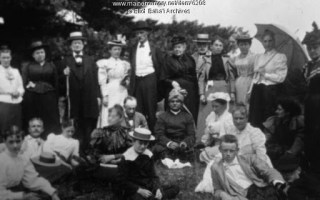 |
| Another group picture in South Pasadena |
Vivekananda would in future enchant the western world with his knowledge and mastery over the English language, in spite of faring not academically well in his intermediate and B.A exams. He scored 46 % and 56% respectively is worth a mention. Out of 500 marks he scored 261 (in Sanksrit he scored 43 and in philosophy 45).
After the death of his father, Vivekananda, out of compulsion had to work to maintain the family. He joined Ishwar Chandra Vidyasagar’s education institution. And because Vivekananda was not able to teach students well, he was sacked from his job by Ishwar Chandra Vidyasagar himself. If not for his mother – Bhuvaneshwari Devi, the world would not have seen Vivekananda, maybe. Like the thousands of Narendranaths from Kolkata, he too would have drowned amongst the crowd.
Vivekananda was from a rich family, but with the untimely death of his father, their ancestral property was swindled by his relatives, leaving the entire family onto the streets. Narendranath was the eldest of the eleven children and the responsibilities of taking care of the family was already on his tender shoulders. While he was unemployed, there were times when he would wander on the streets wearing torn clothes, having no food to eat on many occasions. The fight in a court that was going on incessantly for seventeen years got resolved only a month before the death of Vivekananda.
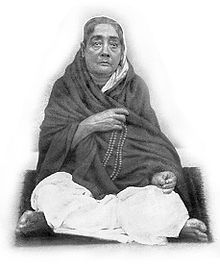
Shrugging off family responsibilities, Vivekananda renounced the world and took up Sanyasa, passing all of his burden onto his mother. His mother did not loathe him because he had quit the responsibilities of the family in times of deep despair. Instead, she would be proudly talk of her son saying, “My son took up Sanyasa at an age of 24”. After Vivekananda’s demise, she lived for another eight years in tremendous trouble, sustaining only on the monthly grant of a hundred rupees from the King of Khitri. Today, the Indian population who are glorifying and celebrating him were of no use when he was alive. He had once lamented, “ Should I always beg to the foreigners”.
“Man of a big heart, broad shoulders, bright eyes…”, are the usual text book descriptions of Vivekananda, projecting him to be the He-Man of Hinduism. Little would the people claiming these know that Vivekananda was always ill and was suffering from numerous ailments. From severe headache to heart problems, he was suffering from 31 health problems. Apart from kidney, liver and throat problems, he was suffering from hypertension, diabetes, asthma, acidity, constipation, weakened nerves, joint pain, swollen legs and was constantly in pain. He had been an insomniac for a long time, and during the end of his days he would sleep as little as a couple of hours only per day. Even a touch would cause excruciating pain in his body. He had written to his disciple Mary Hale at the age of 34, “My hair has grown grey much before my age and my face has wrinkled”. Disheartened by his illnesses once he sighed, “ I have become like a limping horse unable to run the race. At least bestow me peace by granting euthanasia (mercy killing). I can no longer bear this pain”, records Sister Nivedita in her documents.
Even amidst all the ailments, the sharpness of his words hadn’t mellowed a bit. Being the foodie he was, he would eat lot of junk food. “I would add chunks of meat in boiling water with some spices and serve a dish to Thakur (Paramahamsa). Whereas, Naren (Vivekananda) would cook varieties of non-vegetarian dishes”, says Sharadadevi in one of her writings. Sister Nivedita has also elaborately documented the culinary skills of Vivekananda, comprising of national and international recipes. The day he died is when the Hilsa fish had entered the Hoogly river; he had got it cooked, had it for lunch and later in the day when he was resting is when he breathed his last that night.
A dull student as per academic standards, ailing from tens of health issues, shaken by family responsibilities, food obsessed common people can also grow to become “Vivekananda”, was proven by Narendranath to the world. While being entangled in these difficulties also, he had studied all the religions and philosophies of the world. He would travel countries and give speeches. He would relentlessly write books and letters. He had thousands of disciples and millions of followers. He started the Ramakrishna Mission in service to his Guru. All of this, he had accomplished within a span of 15 years.
Can a commoner accomplish all of this? Certainly he/she can. One has to be a Vivekananda for that!
PS: Audio excerpt of Vivekananda’s address at the Parliament of World Religions, Chicago in September, 1893





 Ideas are Immortal